
Friday the 13th is a date that is considered to be an unlucky day in many cultures. Whether or not you believe in its spooky powers, we’d like to take this opportunity to help you develop your listening skills and teach you some advanced vocabulary inspired by the day. Happy Friday the 13th!
More Than Just Bad Luck?
Listen to the story and answer the questions:
- Did Emma take her sense of unease seriously from the very beginning?
- What was the first bad sign she saw that day?
- What are the five strange things that happened to Emma at work?
- What did Emma do at home trying to stop being afraid?
- Was there someone in Emma’s apartment other than her?
Answer key 🔑
- No. She shrugged it off (= dismissed it) as an irrational fear.
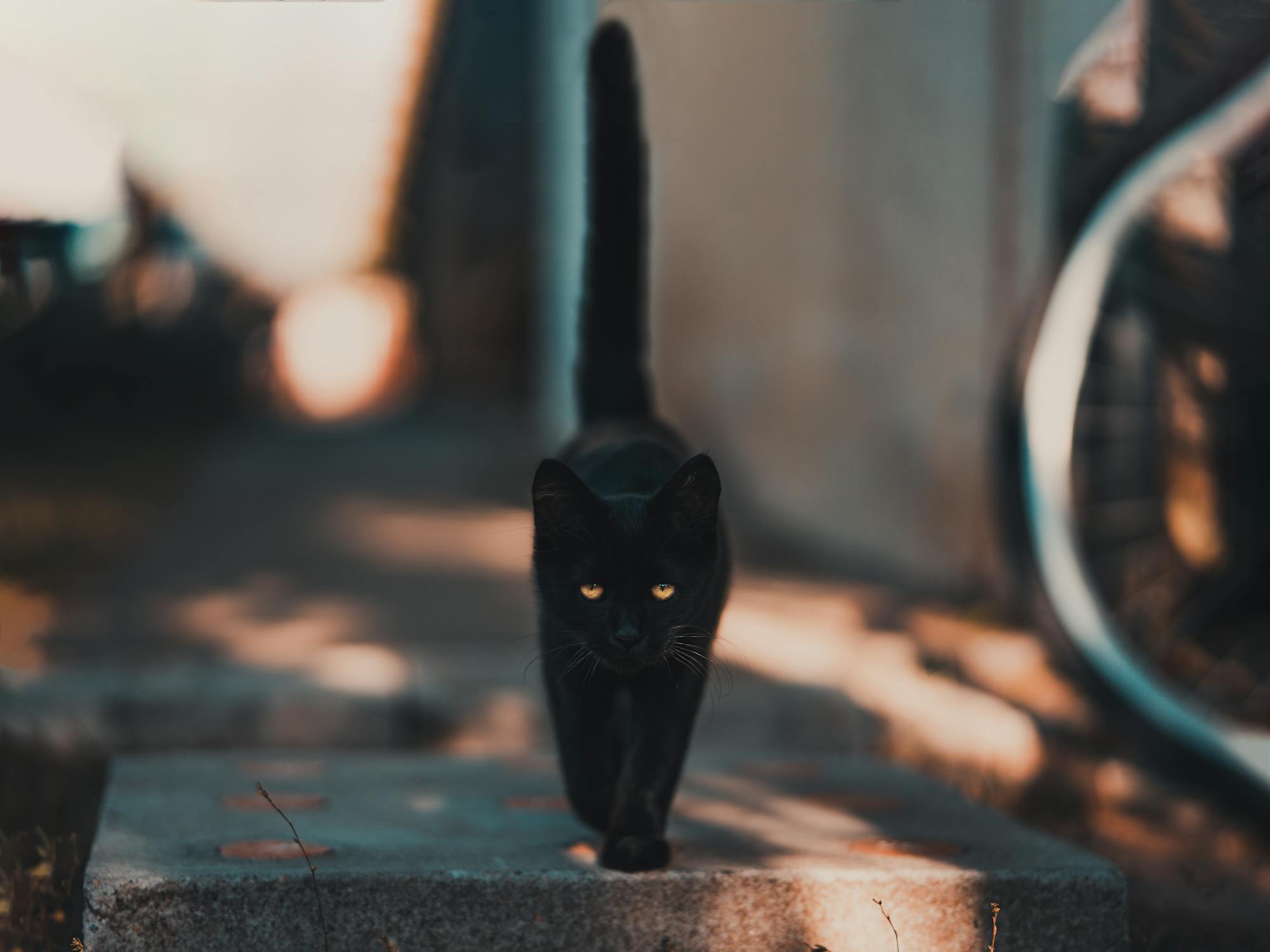
- An old black cat was staring at her from across the street.
- 1) Her computer screen flickered erratically. 2) The printer kept jamming. 3) The colleagues seemed to be acting oddly. 4) In the basement, when she removed the cloth from the mirror, her reflection seemed to distort and darken, and a cold breeze blew through the room. 5) There was a handwritten note with an ominous message on her chair.
- She made sure to check every corner.
- It’s not clear, but if there was, it must have been something supernatural.
Audio script 🎧
On Friday the 13th, Emma awoke with a sense of unease she couldn’t quite shake. She shrugged it off as just an irrational fear, but the day ahead would prove otherwise.
As she left for work, she noticed an old black cat staring at her from across the street. She remembered the superstition about black cats crossing one’s path, but she laughed it off and continued on her way. Little did she know, this was just the beginning.
At the office, strange things started happening. Her computer screen flickered erratically, and every time she tried to print an important document, the printer jammed. Even more unsettling, her colleagues seemed to be acting oddly, whispering and casting nervous glances. They were all in on a joke that she wasn’t part of, or so it seemed.
As the day progressed, Emma’s discomfort grew. During a brief respite, she decided to explore the old, rarely-used storage room in the basement of her office building. She had always been curious about the room, but today, something compelled her to go down.
The basement was dimly lit and filled with dusty, cobweb-covered boxes. As she walked deeper, she found an old mirror draped with a cloth. Feeling an odd compulsion, she removed the cloth and peered into the glass. For a brief moment, her reflection seemed to distort and darken, and a cold breeze blew through the room. Emma shivered and quickly covered the mirror again, her heart racing.
Returning to her desk, she noticed a handwritten note on her chair that hadn’t been there before. It read: “Beware the curse of the 13th.” She laughed nervously, but as the day wore on, the misfortunes continued. Every small error seemed to snowball into a larger problem.
By the end of the workday, Emma was exhausted and eager to leave. As she approached her car, she saw the same black cat from the morning, now perched on her hood. It let out a low, mournful meow before walking away. She got into her car, trying to ignore the feeling of dread that lingered.
Driving home, Emma couldn’t shake the feeling that something supernatural had marked this day. The eerie events and the ominous note seemed too coincidental. When she finally arrived home, she made sure to check every corner, feeling an unshakable sense of paranoia.
That night, as she lay in bed, the power went out. In the pitch darkness, she thought she heard faint whispers echoing through her apartment. She tried to convince herself it was just her imagination, but sleep eluded her. Emma lay awake, haunted by the day’s events, unable to escape the feeling that Friday the 13th had brought with it more than just ordinary bad luck.
Key Vocabulary
| Word | Meaning | Examples |
| to shrug something off | to dismiss or ignore something as unimportant or unworthy of concern | 1) She shrugged her sense of unease off as just an irrational fear. 2) When the critic’s harsh review came out, she shrugged it off and continued with her project. |
| to laugh something off | to treat something as unimportant or not serious by laughing about it | 1) She remembered the superstition about black cats crossing one’s path, but she laughed it off. 2) He tried to laugh off the awkward comment, even though it clearly bothered him. |
| unsettling | causing discomfort or unease; disturbing | 1) Even more unsettling, her colleagues seemed to be acting oddly. 2) The sudden silence in the abandoned house was quite unsettling. |
| to compel someone to do something | to force or drive someone to take a particular action | 1) Something compelled her to go down. 2) Her sense of duty compels her to volunteer for the dangerous mission. |
| compulsion | an irresistible urge to act in a certain way, often driven by an internal or external force | 1) Feeling an odd compulsion, she removed the cloth from the mirror. 2) He feels a compulsion to check his phone every few minutes, even when he is with friends. |
| dimly lit | lighted in a way that is faint or not very bright | 1) The basement was dimly lit. 2) The restaurant was dimly lit, creating a cozy and intimate atmosphere. |
| to distort | to become twisted or altered | 1) Her reflection seemed to distort and darken. 2) Her voice began to distort over the radio. |
| to snowball into something | to grow or escalate rapidly into something much larger or more significant | 1) Every small error seemed to snowball into a larger problem. 2) What started as a small argument quickly snowballed into a major family feud. |
| dread /dred/ | a feeling of great fear or anxiety about something that may happen | 1) She got into her car, trying to ignore the feeling of dread. 2) She felt a deep sense of dread as the deadline for her final exam approached. |
| to linger | to remain in one’s thoughts | 1) She got into her car, trying to ignore the feeling of dread that lingered. 2) The smell of freshly baked cookies lingered in the kitchen long after they were gone. |
| to shake something | to dismiss or get rid of a fear or thought from one’s mind | 1) Emma couldn’t shake the feeling that something supernatural had marked this day. 2) He struggled to shake the nagging worry about the upcoming presentation. |
| eerie /ˈɪri/ | strange and frightening; causing a feeling of unease | 1) The events of the day were eerie. 2) The abandoned asylum has an eerie atmosphere. |
| ominous | giving the impression that something bad or unpleasant is going to happen; threatening | 1) The eerie events and the ominous note seemed too coincidental. 2) The dark clouds gathering on the horizon had an ominous look. |
| to elude /ɪˈluːd/ someone (of sleep) | for sleep to be unattainable or difficult to achieve | 1) She tried to convince herself it was just her imagination, but sleep eluded her. 2) Despite his exhaustion, sleep continues to elude him throughout the night. |
| to be haunted by something | to be persistently troubled or tormented by a particular thought, memory, or feeling | 1) Emma lay awake, haunted by the day’s events. 2) She was haunted by the memory of the accident for years after it happened. |
Vocabulary Practice
Click the link here and type in the right word to complete the sentences. Refer to the table above whenever needed.
Do you have any questions or other feedback? Feel free to leave them in the comments below, and we’ll be sure to respond.
 Enguroo Online English School